

University of Bradford switches to sustainable P50 Eco fire extinguishers across campus
December 17, 2025
With the push for net zero and stringent sustainability targets to meet, organisations are looking at all aspects of their business to find carbon savings and adopt more environmentally friendly products and practices.
Steve Wiggins, Associate Director of Health and Safety at the University of Bradford explains how they have collaborated with Britannia Fire to reduce their carbon footprint minimise waste and strengthen fire resilience within at-risk communities in West Africa.
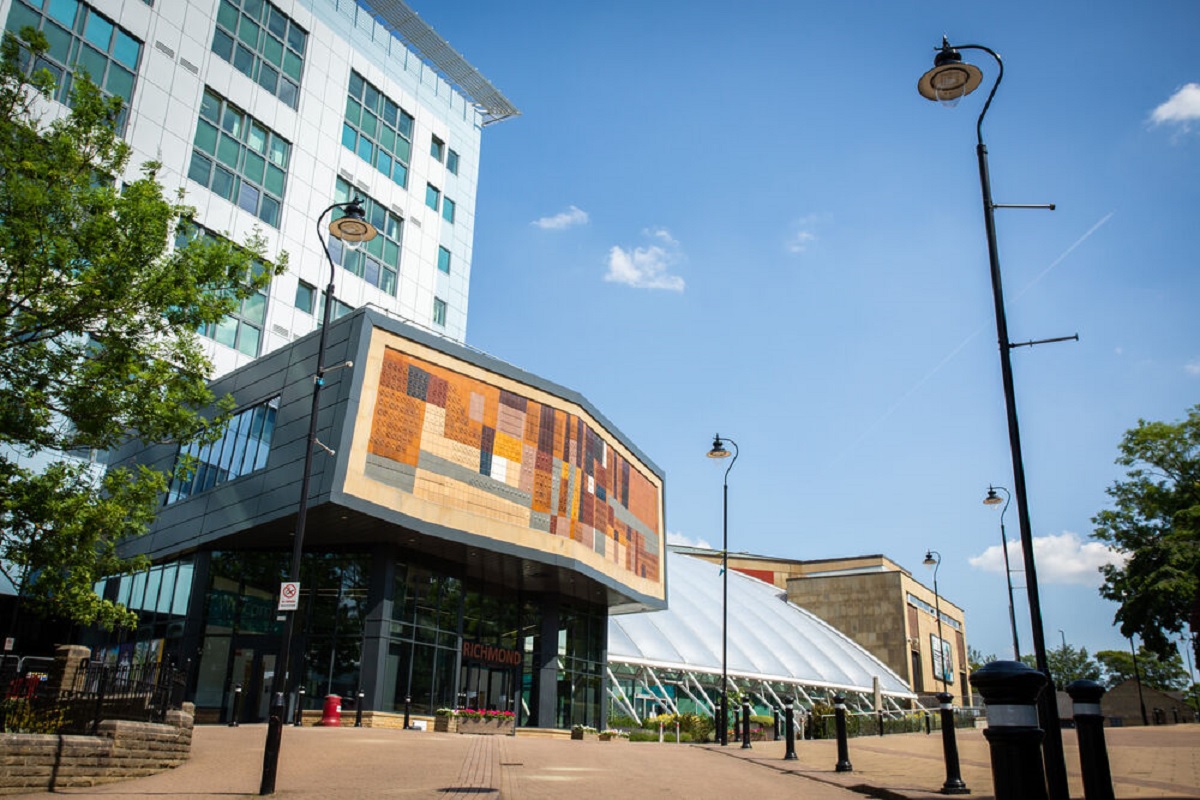
“The University of Bradford’s modern campus spans 35 acres and boasts 20 academic and residential facilities, which cater for around 1,800 staff and 12,000 students. We are big on doing our bit for the planet and are always looking for ways to make our campus run more sustainably”.
We take fire safety very seriously and when it came to updating our fire extinguishers, we wanted to do better and find a more sustainable and cost-effective solution.
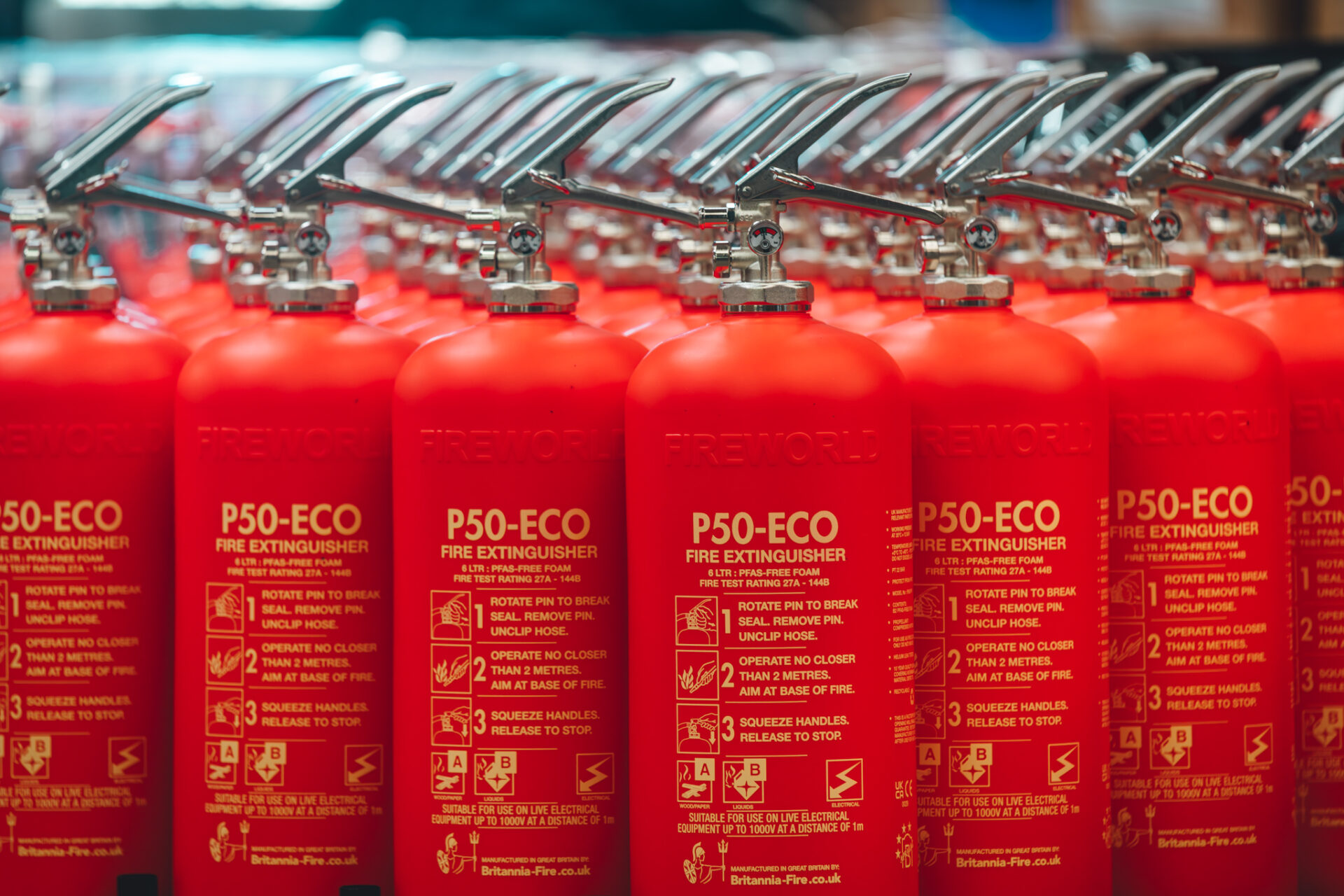
From research and collaboration with others it was clear that Britannia’s P50s would be the best option, helping us to meet our sustainability targets and cut carbon emissions by 14%. In addition to having a low-energy manufacturing process, they are PFAS free, fully recyclable and have a 20-year life span. There is nothing on the market that comes close to offering the same environmental benefits and savings.
We had 1,500 traditional metal extinguishers, switching to the P50-ECO we only needed around 500 units, resulting in huge cost savings.
Steve Wiggins Associate Director of Health and Safety at the University of Bradford
Glowing reviews from existing customers gave us the confidence to move forward and we opted for the P50-ECO due to its impressive environmental credentials. It’s also multi-purpose and suitable for both Class A/B fires and electrical fires meaning we could consolidate and cut the number of fire extinguishers on campus by a third. At the time, we had 1,500 traditional metal extinguishers on site, which were a mix of C02, foam, water and powder. Switching to the P50-ECO, simplified things considerably as we only needed around 500 units, resulting in huge cost savings.
In addition, they do not require costly annual servicing. Not only has this saved us a significant amount of money, but it’s also led to a big cut in carbon emissions associated with regular external servicing.
Another draw was the fact that Britannia runs a scrappage scheme and managed the disposal of our old extinguishers. This made the switch so much easier and enabled us to offset some of the costs for the new extinguishers.
Traditional metal extinguishers are notoriously difficult to recycle but we wanted to avoid them going to landfill. With this in mind, Britannia Fire introduced us to Fire Aid, a charity that collaborates with the fire industry to minimise equipment waste by recycling and sending it to countries in need. Britannia took all the old extinguishers away for inspection and those that were still of operational quality were packaged up on our behalf and sent to Fire Aid’s project in Ghana.
The Ghana National Fire Service faces immense challenges, including significant shortages of essential equipment. Large-scale market fires are a frequent and devastating and emergency response times can sometimes exceed an hour. In such conditions, the highly flammable materials found in these markets, combined with Ghana’s high temperatures, exacerbate the severity of these fires. Access to fire extinguishers can make a critical difference in these situations, helping to contain fires before they spread. We are deeply committed to sustainability and take social responsibility very seriously, so we were keen to support the Ghana project and strengthen fire resilience within these high-risk communities.
Britannia’s customer service has been excellent throughout the project.
Steve Wiggins Associate Director of Health and Safety at the University of Bradford
In addition to the P50-ECO fire extinguishers, we increased the number of fire blankets on site by 20% as they are another simple, versatile, and easy-to-use fire safety tool and more suited for locations such as kitchens and laboratories of which the university has numerous. This approach has enabled us to manage all our risk classes that vary from building to building and this was backed up by delivering training on extinguishers and blankets towards the end of the project.
Britannia’s customer service has been excellent throughout the project. The roll out was done building-by-building, starting with the smallest first so Britannia’s engineers could familiarise themselves with the campus and operations. Installation was well planned, quick and very smooth as we supplied a lot of planning resources inclusive of marked up plans and compartment drawings. The engineers needed little supervision once they were up and running, and the installation team was scaled up and down depending on the size of the building. Additional service provision were also local to Bradford, further cutting carbon emissions.
Maintenance is so easy. We have detailed plans showing where the P50 extinguishers are located and have onsite security patrols, who report any issues directly. Annual checks are carried out internally by our Health and Safety Technician.