
FAQs
General
-
Class A
Refers to fires caused by solid, combustible materials, such as wood, paper, fabric or plastic.Class B
Refers to fires caused by flammable liquids, such as petrol or alcohol.Class C
Refers to fires caused by flammable gases, such as propane or hydrogen.Class D
Refers to fires caused by combustible metals, such as magnesium or potassium.Electrical fires
Caused by electronic equipment, faulty wiring or short circuits, for example.Class F
Refers to fires caused by fats, cooking oils and grease. -
There are five main types of fire extinguishers – foam, water, dry powder, Co2 and wet chemical.
These types are allocated different colours for quick and easy recognition.
Foam is Cream.
Water is Red.
Powder is Blue.
Co2 is Black.
Wet Chemical is Yellow. -
Generally, most portable fire extinguishers are operated the same which is:
- 1. Rotate the safety pin to break the tamper seal. Remove pin and unclip the hose.
- 2. Aim at base of fire – no closer than 2m for safety.
- 3. Squeeze handles and release to stop.
Note: When using a Co2 extinguisher, do not hold the horn.
-
As an example, the P50P has achieved a 43A/233B.
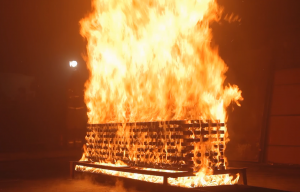
The 43A is for a Class A and this is several sticks stacked up, which is 4.3 metres long.
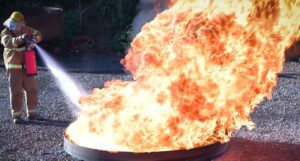
The 233B is a large circular tray, which is 3 metres in circumference, and will have a total of 233L of liquid which is broken down into 2/3 fuel and 1/3 water.
-
Yes! We hire our fire testing facility at a daily rate. Please speak to our friendly team here for pricing and availability.
-
Not yet. A UK ban on PFAS in firefighting foam is expected towards the end of 2026, so businesses need to plan ahead. There is likely to be a five-year transition period for fire extinguishers once legislation is passed so there’s still time to make the switch and future proof your business. Get in touch with us to today to find out more about our PFAS free fire extinguishers.
P50 Fire Extinguisher
-
The P50 was designed for simple use, long-life performance, resistance to corrosion and reducing carbon footprint, which over its 20-year life will help to save the customer significant costs.
It is manufactured in line with the highest accreditation including PED, CE/UKCA, EN3, MED, and Kitemark approved.
The full range conforms to Pressure Equipment Regulations and European standards. - The main construction of the P50 is High-Density Polyethylene with an Aramid fibre material woven onto the inner cylinder and external UV protection.
Click here to see how this innovative extinguisher is manufactured. -
All pressure equipment, including fire extinguishers, must be manufactured in accordance with PED/CE/UKCA. This is a legal requirement which the black P50 meets.
British Standards EN3 require fire extinguishers to be red, therefore any other colour is deemed as non-compliant. However, this is not a legal requirement, so you are not breaking any fire safety rules by installing the black P50 (or chrome extinguishers). It is noted that the black P50 is manufactured to the relevant parts of EN3. -
No, annual servicing is not a legal requirement. BS 5306 is a voluntary code of conduct which recommends that traditional steel fire extinguishers are serviced annually as they are prone to corrosion. This doesn’t apply to composite fire extinguishers as they are made from a unique combination of durable plastic and aramid fibres that don’t corrode.
- The P50 requires annual maintenance checks which can be carried out by a trained, competent person. This involves:
- Visually checking the gauge is in the green segment and the safety pin and tamper tag are in place.
- Removing the magnet from the base of the unit and checking the magnetic gauge (needle should move to show it is not stuck and return to the green segment).
- Check the extinguisher is within the life expectancy by the colour date stud.
- Sign the back of the extinguisher with permanent marker pen.
Please watch this short video for further guidance. -
Yes, Britannia’s P50 water-based fire extinguishers are legal and have passed BS EN3-7 tests, demonstrating safety across various fire types, including electrical fires. This removes the need for multiple units at fire points and saves money.
Contact Us
Have another question?
Fill in the form below and one of our advisors will contact you regarding your query.